


About Machine Narratives
Supply chain research for the humanoid robotics buildout.
I created Machine Narratives because the humanoid robotics revolution is coming faster than most people realize — and the real winners will be determined by who masters the physical components, not just the software.
Written by Tim. 10+ years running departments in consumer electronics across strategy, business management, supply chain, sourcing, and product development. I've seen how supply chain dynamics actually work — not in theory, but in the factory, at the negotiating table, and on the sourcing floor.
That's the lens I bring to humanoid robotics.
Every week, I publish one deep-dive on a specific chokepoint in the humanoid robot supply chain. I trace who controls it, what it costs, and what it means for the companies trying to build at scale.
What makes this different:
No recycled press releases. No hype. No pitch decks. Just original research on the physical stack that decides whether these machines actually make it to production: motors, batteries, magnets, sensors, materials, and structure.
What I Cover
Actuation — Motors, gearboxes, and the companies that control them
Power — Batteries, thermal constraints, and the silent bottleneck
Materials — Rare earths, specialty alloys, and China’s monopoly
Sensors — Tactile, force, and the $168M market nobody’s covering
Vision — Cameras, LiDAR, depth sensors, and the software layer
Compute — Edge AI, inference chips, and the platform question
Structure — Frames, joints, and the materials underneath
End Effectors — Hands, grippers, and the dexterity problem
Who This Is For
Professional investors and analysts looking for an edge in the humanoid robotics theme
Engineers and operators in the robotics space who want supply chain context
Anyone who wants to understand the real building blocks of the next industrial revolution
What You Get
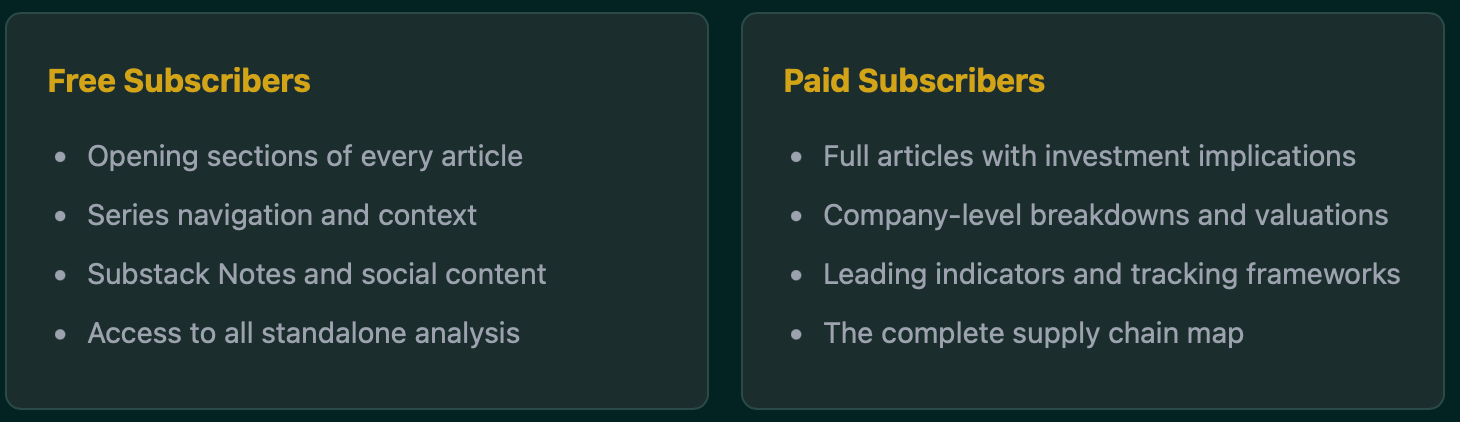
Subscribe to Machine Narratives
The Research
Each series maps a different layer of the humanoid robot supply chain. They are designed to stand alone but connect into a single picture. Start with whatever layer interests you.

