

The Sensor Nobody Covers: A 4-Part Series
1. The $168M Nobody Sees
2. 2,500 vs 12 - Why Robots Still Can’t Feel
3. Double Dependency - China’s Grip on Robots
4. The Real Alpha is One Layer Deeper
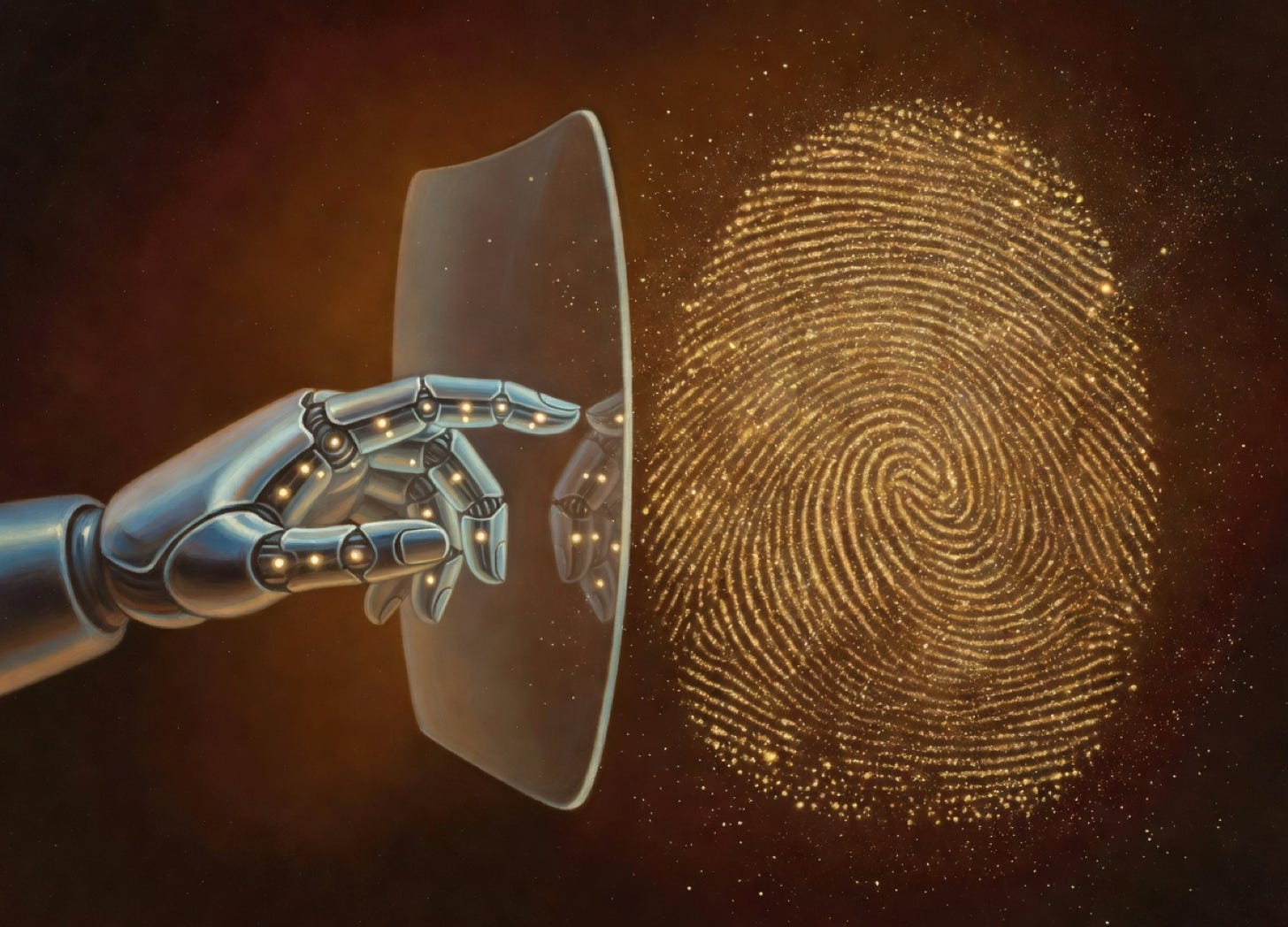
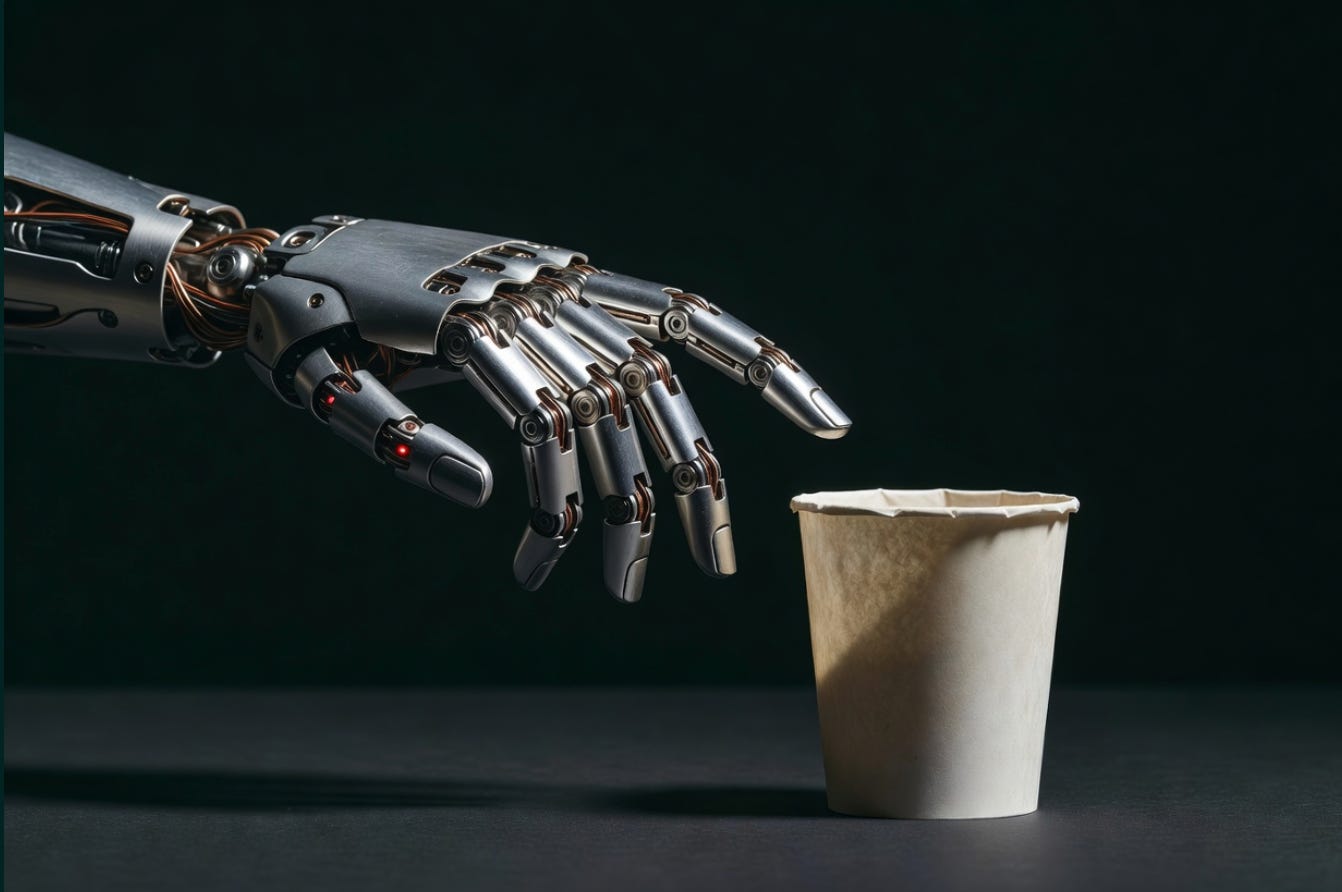
The first time I watched a robot try to pick up a paper cup, I felt sorry for it.
It was a demo at a robotics lab. The robot’s hand closed around the cup with the same mechanical certainty it would use on a steel cylinder. Same grip. Same force. The cup collapsed instantly, coffee pooling on the table. The robot didn’t react. It opened its fingers, reset, and tried again with the same force. Same result.
The robot had cameras for eyes. It could see the cup. What it couldn’t do was feel the difference between a paper cup and a steel cylinder. It had no sense of touch worth speaking of.
The engineers weren’t embarrassed. They were used to it. “We’re working on it,” one said, and the conversation moved on to actuators and AI models. The things people actually want to talk about.
I went home and started digging. What I found was a big gap between what robots can sense and what humans can feel. Almost nobody outside the robotics world knows it exists.
In Part 1, we showed the $168M market that nobody is tracking. This article explains why that market exists and the engineering gap that makes these sensors so hard to build.
The Touch Gap in One Number: A robot fingertip has roughly 12 sensing points. Yours has 2,500 per square centimeter. That 200:1 ratio is the most expensive unsolved problem in robotics.
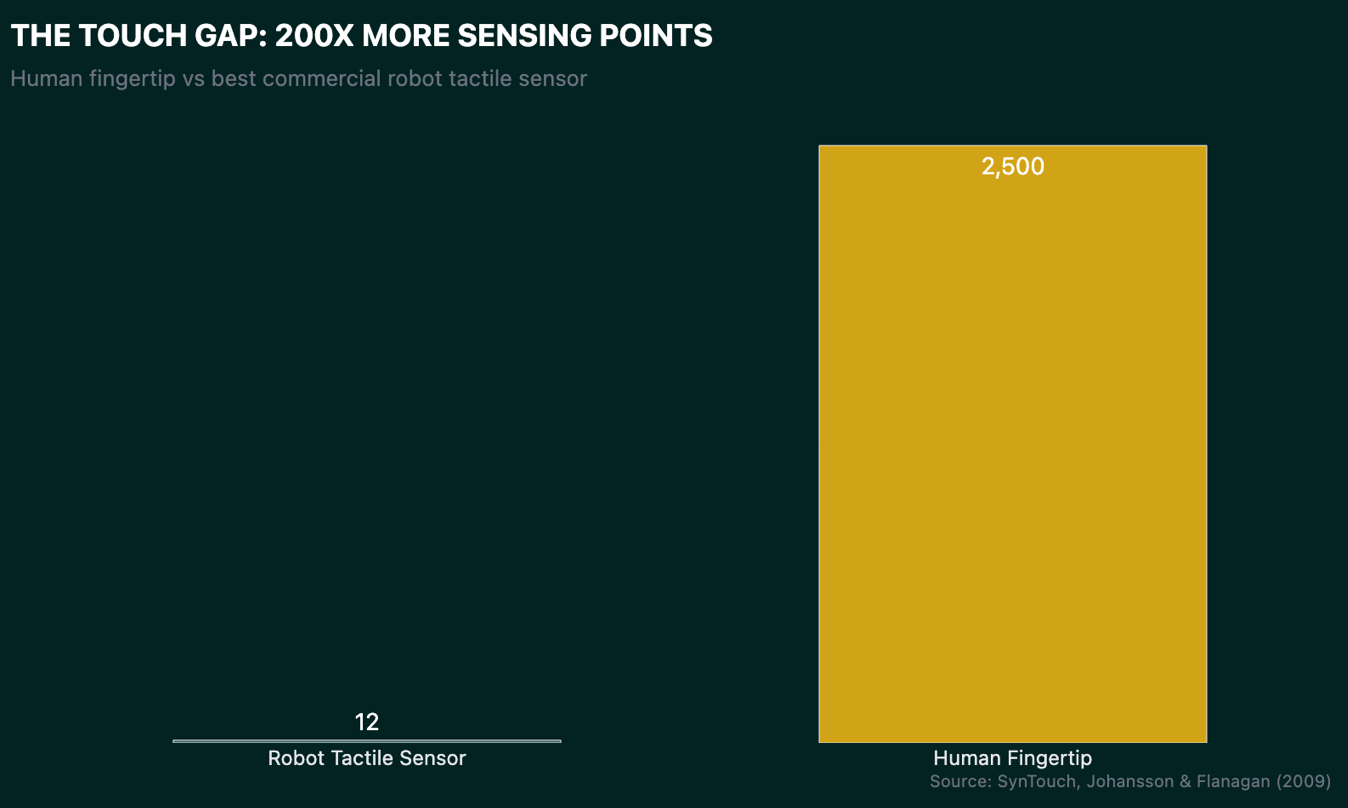
Sensing points per square centimeter: human fingertip vs. best commercial tactile sensor vs. best research prototype. Source: Machine Narratives Research, 2026
What Tactile Sensing Actually Is
Force and torque sensors sit at the joints — wrists, elbows, shoulders, ankles. They measure mechanical load: how much force each joint is applying in each direction. These are mature. You can buy them from a dozen companies and have one shipped next week.
Tactile sensors are different. They sit at the contact surface — the fingertip, the palm, the forearm pressing against a doorframe. They measure what’s happening where the robot touches the world. Texture. Slip. Contact geometry. The local details that tell you whatyou’re holding, not just how hard you’re squeezing.
Your fingertip has about 2,500 mechanoreceptors per square centimeter. Each one reports something different: pressure, vibration, stretch, texture. They fire signals to your brain hundreds of times per second, telling you whether you’re holding a grape or a golf ball without looking. You do this unconsciously. You’ve done it your entire life.
The best commercial tactile sensor today has roughly a dozen sensing points. Research prototypes push into the hundreds — some impressive work from Stanford and Chinese universities gets close to a thousand. But those are hand-built, one-off devices costing thousands per patch. They’re not products.
Market Size:
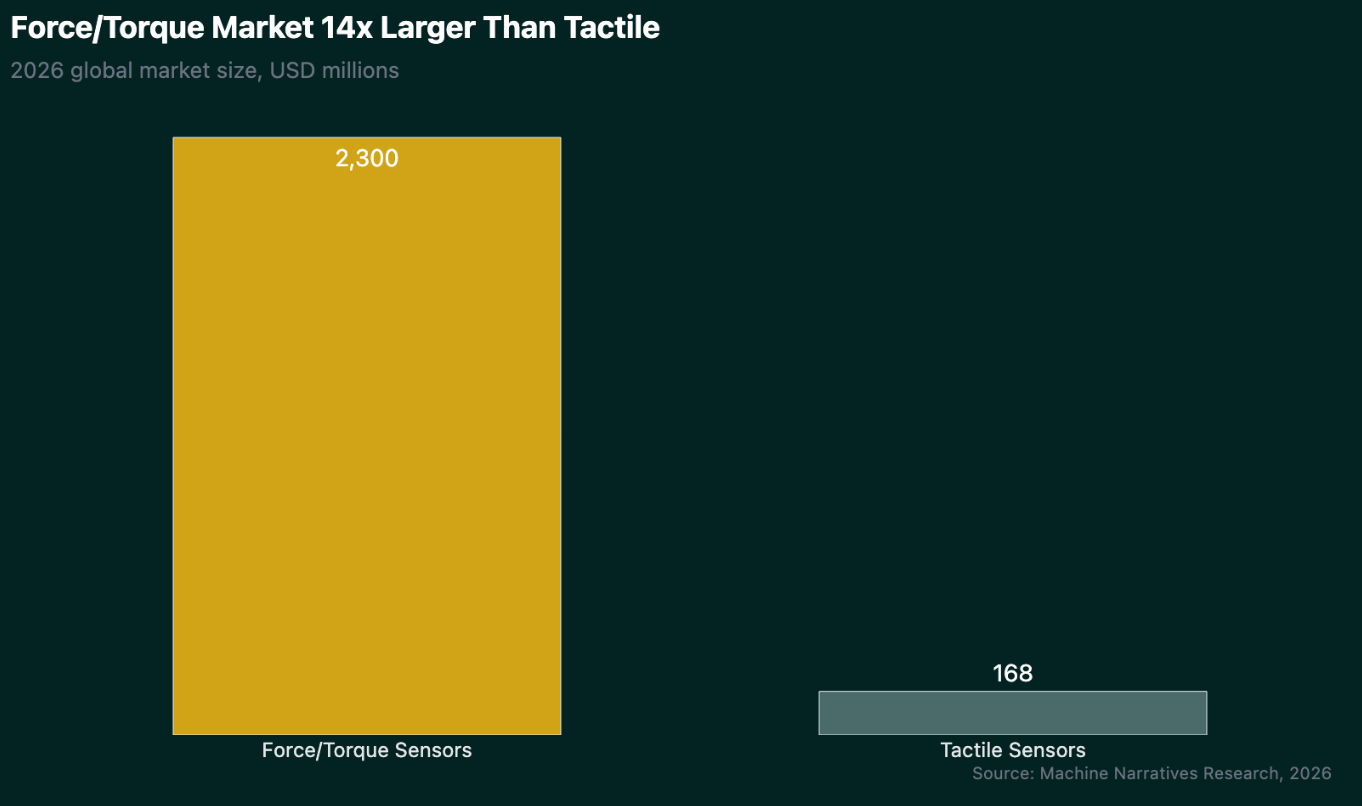
Force/torque sensors: ~$2.3 billion (2026).
Tactile sensors: ~$168 million.
The tactile market is 14x smaller, roughly where force/torque was twenty years ago. Technically proven, commercially immature, waiting for an application that demands it at scale.
That application just showed up. If this analysis is useful, subscribe to follow the full sensor series.
